
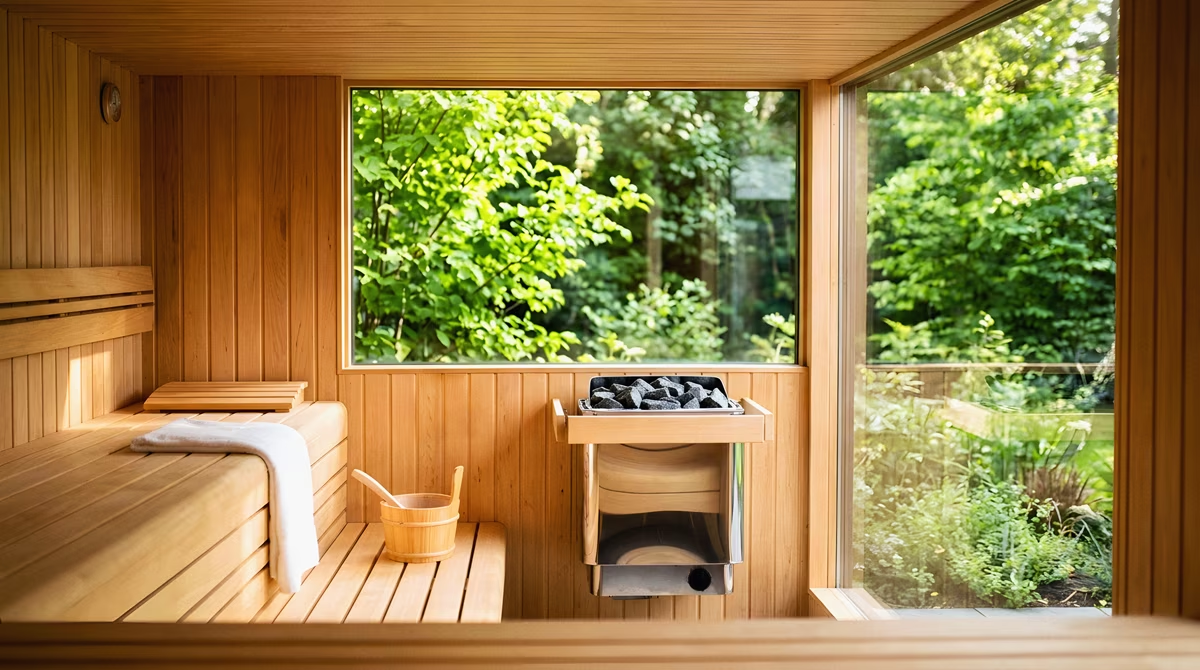
Home sauna builds are picking up steam (pun intended) and many might be asking the valid question: “What size sauna heater do I need?”
Well, fear not, saunamaniacs! We built a sauna heater calculator for this very question. Feel free to fiddle with it – set your dimensions and known information, and start planning for your dream sauna. Please note that the calculator can only give you an estimate, because each sauna build is different and the numbers depend on many factors.
If you’re wondering about the power consumption of electric sauna heaters, you can check out our sauna power consumption calculator for supplemental information.
Sauna Heater Size Calculator
Find the right kW for your sauna room
Units
Room Dimensions
Wall Material
Insulation
Recommended Heater Size
6
kilowatts (kW)
Calculated need: 4.6–5.6 kW
252 ft³
Room Volume
252 ft³
Adjusted Volume
Common Sizes
Electrical (240V)
Breaker30A
Amperage25A
Wire Gauge10 AWG
Voltage240V
Always consult a licensed electrician. Requirements vary by local code.

.
Sizing your sauna heater
Correct sizing matters. The aim is to bring the room to around 160 to 195°F (70 to 90°C). Get the sizing right and you reach optimal temperature on time and hold it without straining the heater. Get it too small and it never quite gets hot enough. Get a size too big and you pay for heat you can’t use, and have an uneven löyly spread.
If you fall between two sizes, one step up is OK. Two steps up is not.
The basic heaternomics
Yes, that heading was a John Cena reference. But first, start with the size of your sauna room. For electric heaters, the rough figure is 1 kW for every 50 cubic feet. This number is your starting point, not your final answer. Insulation, glass panels, and outdoor exposure move it up or down.
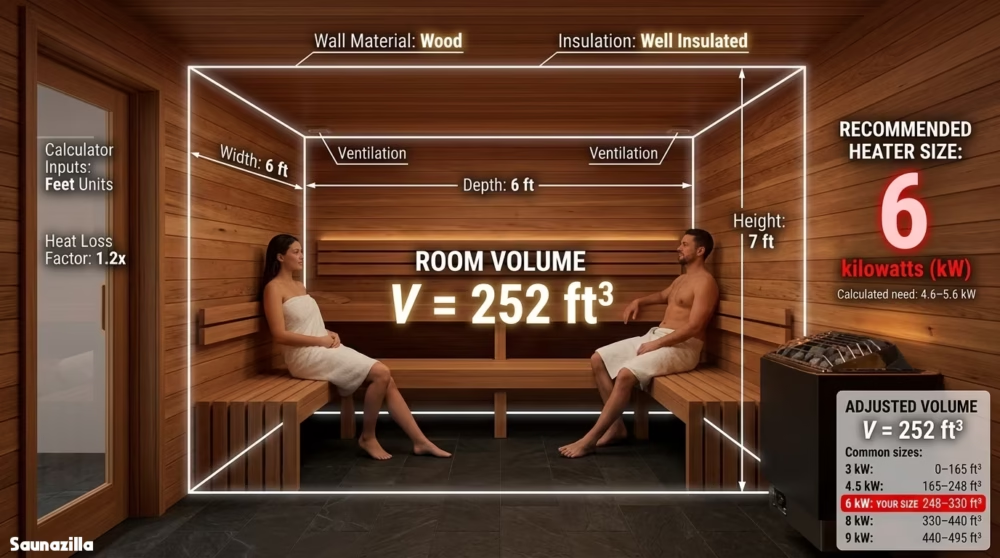
Two saunas the same size can have different sized heaters. The build is what changes it.
Glass is a biggie (glass doors/windows). To account for heat loss through glass, add 1.2 m³ to the effective room volume for every m² of glass surface. Exposed log or raw wood walls absorb heat while the room warms up, needing around 1.5 times the power of smooth panel walls. An outdoor sauna loses warmth to the cold around it.
Things that push the required kW higher:
- Glass doors and windows
- Poor insulation or older buildings
- Exposed log walls instead of panelled walls
- High ceilings above 2.3 m / 7.5 ft
- Cold climate locations (outdoor saunas)
Others let you ease off:
- Top-notch insulation
- Indoor installation
- Small, compact rooms
- Warm climate locations
- Pre-heated adjacent spaces
120V or 240V?
A 120V heater will be small and plugs into the wall. Think 1.5 to 4.5 kW and under 200 cubic feet. A 240V heater runs from 4.5 to 18 kW, and needs its own circuit. Please consult an electrician for this. Don’t ever mess with electricity.
Wood-burning heaters
While an electric heater is convenient, we would like to remind you that the traditional wood-heated version is still very much a viable option, and can offer a different kind of an experience.
Burning wood, firing it up, attending the fire, and waiting for the right temperature can be a lot of work and perhaps even a nuisance, but then again, that’s part of the tradition right there. They also need proper ventilation, a chimney, and a steady supply of dry wood. Just sayin’ – it’s pretty awesome.
We have no affiliation with any heater manufacturer, so we won’t make brand recommendations. You’ll have to do some research and see what’s available where you reside. Reddit also has a very active sauna page, offering some hot takes.
.
Shop for
Saunazilla
Your friendly authority brand in all things sauna and Finland. “Just Finnish it”.



Saunazilla 2026 | Privacy Policy | Terms Of Service
