

Summary
Sauna best practices include showering before entering, starting at a comfortable temperature (150–175°F for traditional saunas, 120–140°F for infrared), keeping sessions to 15–20 minutes, staying well hydrated, and cooling down gradually between rounds. Following these evidence-based guidelines — backed by over two decades of Finnish research — can help you experience significant cardiovascular, mental health, and recovery benefits while keeping risk to a minimum.
Not to sound too weird, but we grew up in Finland, where saunas outnumber cars. True story. We learned our traditional best sauna practices before we learned to ride a bike. That cultural foundation, combined with the sauna science, shapes everything we share on this article here.
Here’s the thing: sitting in a hot room isn’t complicated, but doing it well — safely, consistently, and in a way that compounds health benefits over months and years — requires some intention. The difference between a good sauna habit and a great one often comes down to the details.
A landmark 2015 study published in JAMA Internal Medicine, following 2,315 Finnish men over 20 years, found that those who used the sauna 4-7 times per week had a 40% lower risk of all-cause mortality (risk of dying from any reason) compared to once-weekly users.
A 2018 systematic review by Hussain & Cohen, analyzing 40 clinical studies and 3,855 participants, confirmed that regular dry sauna bathing shows potential health benefits across cardiovascular (heart and blood vessels), respiratory (related to breathing and lungs), and pain-related conditions — with only one study reporting an adverse effect (temporary and reversible).
Those numbers are powerful. But they only increase your wellness if you’re doing it right. This guide covers everything from pre-session preparation through cool-down, from how to sauna safely as a beginner to how to build a long-term routine.
For a deeper look at the science behind the benefits, see our comprehensive guide to sauna health benefits.
Disclaimer: Saunazilla.com is not a medical publication, nor are we medical professionals. If you have doubts about incorporating a personal sauna routine, please consult your physician first.
Why Sauna Practices Matter
Sauna bathing: A form of whole-body heat therapy (thermotherapy) involving short exposures to high environmental temperatures — typically 80–100°C (176–212°F) in a traditional Finnish sauna — interspersed with cooling-off periods and rehydration.
You might wonder: does it really matter how you sauna? Can’t you just sit in the heat and let your body do its thing?
To a point, yes. But the research tells a clear story: protocol matters. Frequency, duration, temperature, hydration, and cool-down habits all influence the degree of benefit you receive — and how safely you receive it.
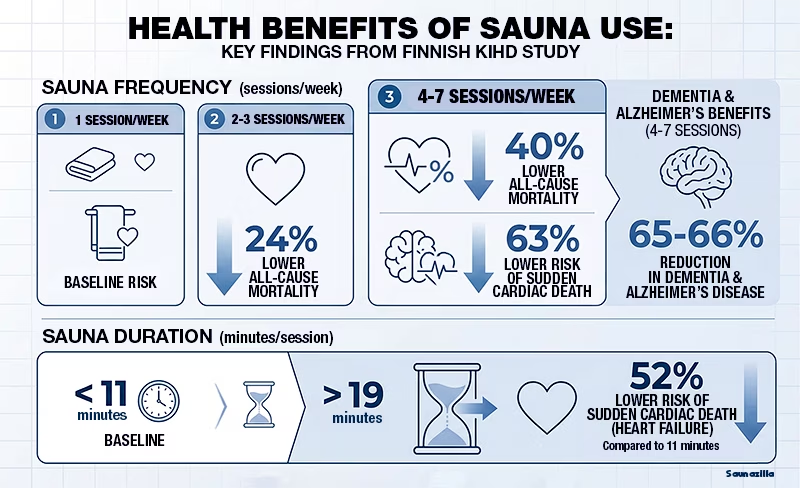
The Kuopio Ischemic Heart Disease (KIHD) Risk Factor Study, one of the longest-running cardiovascular research projects in Finland, tracked sauna habits and health outcomes for over two decades. The findings were striking, and dose-dependent:
- 1 session/week: baseline risk
- 2–3 sessions/week: 24% lower all-cause mortality
- 4–7 sessions/week: 40% lower all-cause mortality, 63% lower risk of sudden cardiac death
Session duration mattered too. Men who spent more than 19 minutes per session had a 52% lower risk of sudden cardiac death (heart failure) compared to those who stayed less than 11 minutes.
The sauna health benefits also extend well beyond the heart. Research links regular sauna use to reduced risk of dementia and Alzheimer’s disease (65–66% reduction at 4–7 sessions/week).
Other benefits were lower incidence of respiratory diseases, reduced symptoms of depression, improved sleep quality, and faster post-exercise recovery.
But the physiology outcomes are tied to consistent, safe practices. Skipping hydration, drinking alcohol before a session, or pushing too hard too fast as a beginner doesn’t just reduce the benefits — it creates genuine risk.
The safe practices outlined below are what separate a casual hot room visit from a health-building habit.
💡
What this means for you
Follow the recommended procedures to stay safe and optimize health benefits. The recommendations are backed by strong science.
How to Sauna: Before Your Session
Preparation is half the session. What you do in the 30–60 minutes before stepping into the sauna room affects your comfort, safety, and the quality of the experience.
Shower First
Always shower before entering the sauna. This is non-negotiable in Finnish culture, and most public saunas and spas everywhere else — and for good reason. A pre-sauna shower removes lotions, deodorants, and surface oils from your skin, allowing you to sweat more efficiently. In shared saunas, it’s also a basic hygiene courtesy.
A warm (not scalding) shower also begins the vasodilation process (blood vessels widen, so more blood flows through your body), gently preparing your heart and blood vessels for the heat ahead.
Hydrate Properly
Dehydration is the single most common risk factor in sauna use. Your body can lose 0.5 kg (roughly one pint) of sweat during a single session, according to research published in Annals of Clinical Research.
💡
Pro tip
Drink 16–24 oz (500–700 ml) of water in the hour leading up to your session. Not all at once — sip steadily. If you’re coming from a workout, add electrolytes. We keep a water bottle within arm’s reach during every session, no exceptions.
Time Your Meals
A full stomach and heat don’t mix well. Blood flow redirects heavily toward your skin during a sauna session, and your digestive system competes for the same circulatory resources. Wait at least 1.5–2 hours after a heavy meal before entering the sauna.
A light snack 30–45 minutes before is fine and can help stabilize blood sugar.
What to Bring (and What to Leave Behind)
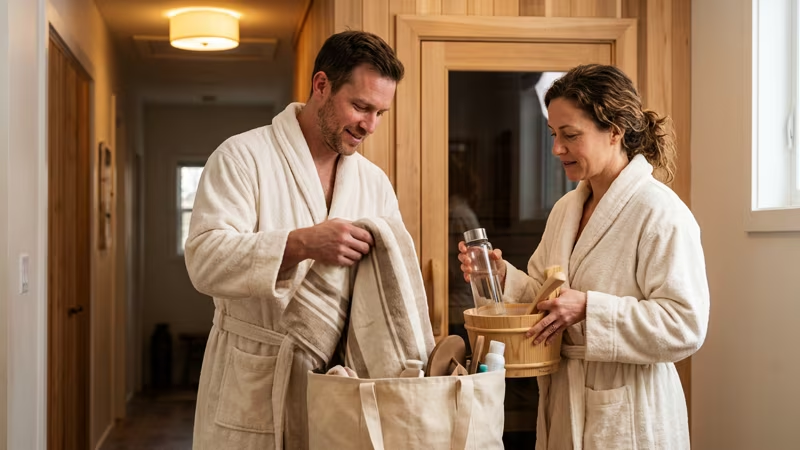
- Bring: A clean towel to sit on (protects the bench and your skin), a second towel for drying off, water
- Leave behind: Your phone, jewelry, watches, contact lenses, and any metal accessories. Electronics don’t survive sauna conditions, and metal heats up fast against your skin.
What to Wear
This depends on context. In Finnish sauna culture, many saunas, especially home saunas, are quite often ‘textile-free’ — it’s simply practical and culturally normal.
In public or gym saunas, especially in other countries, a towel or light swimwear is standard. Avoid heavy fabrics or anything synthetic that traps heat against your skin.
If the heat feels too intense on your head, it’s OK to wear a sauna hat. Most often, they’re simple felt hats that take the excess heat away from your hair and adds a level of comfort.
Safe Practices During Your Sauna Session
This is where the core of your sauna therapy lives. Temperature, duration, positioning, and knowing when to exit are the pillars of a safe, effective session.
Temperature Guidelines by Sauna Type
Not all saunas are created equal. The type you use determines the temperature range, humidity level, and how your body responds to the heat.
| Traditional Finnish Sauna | Infrared Sauna | Steam Room | |
|---|---|---|---|
| Temperature | 150–200°F (65–100°C) | 120–150°F (49–65°C) | 110–120°F (43–49°C) |
| Humidity | 10–20% (up to 40% with löyly) | Very low (~5%) | ~100% |
| How it heats | Heats the air → heats the body from outside | Infrared panels heat the body directly | Steam generator heats humid air |
| Session length | 10–20 min per round | 20–40 min (single round) | 10–15 min |
| Multi-round protocol | Yes — 2–3 rounds with cool-down between | Typically single round | Not standard |
| Cardiovascular research | Strongest (KIHD, Mayo Clinic Proceedings) Strong evidence |
Moderate (Waon therapy, CHF trials) Moderate evidence |
Limited Limited evidence |
| Pain & recovery | Moderate evidence | Strong for soreness & chronic pain (Ahokas 2023, Masuda 2005) Strong evidence |
Limited Limited evidence |
| Best for | Overall health, cardiovascular conditioning, tradition | Heat-sensitive users, chronic pain, gentle recovery | Respiratory conditions, skin hydration |
| Accessibility | Requires dedicated installation or gym membership | Plug-and-play models available for home use | Usually found in gyms and spas |
The majority of the large-scale cardiovascular and longevity research — including the KIHD study — was conducted using traditional Finnish saunas at temperatures around 80°C (176°F).
Infrared saunas operate at much lower temperatures but may offer comparable benefits for pain relief and recovery, particularly for people who find traditional sauna heat uncomfortable.
If you happen to stumble upon a traditional Finnish smoke sauna (savusauna), make sure to check for best practices at the facility or host.
Session Duration — How Long to Stay
The right duration depends on your experience level and the type of sauna you’re using.
For beginners:
- Start with 5–10 minutes per session
- Sit on the lower bench where the air is cooler
- Exit at the first sign of discomfort — don’t push through it
For intermediate users:
- 10–15 minutes per session
- Upper bench is fine if you’re comfortable
- Begin experimenting with multi-round sessions (heat → cool → heat)
For experienced users:
- 15–20 minutes per round (max ~30 minutes in a single stretch)
- Multi-round sessions of 2–3 rounds are the Finnish standard
- The classic Finnish protocol: 10–15 min dry heat → cool shower or rest → 10–15 min with löyly (steam) → cool down
💡
Pro tip
The Finnish multi-round protocol is where the magic happens. The first round warms your body and opens blood vessels. The cooling period between rounds triggers a cardiovascular “reset.” The second round, often with löyly (water thrown on the rocks), deepens the heat response. In our experience, the second round is consistently the most relaxing.
Bench Positioning and Löyly Technique
Heat rises. In a traditional sauna, the difference between the upper and lower bench can be 20–30°F (10–15°C). If you’re a beginner or feeling the heat more than usual, move to a lower bench. If you want a more intense session, the upper bench delivers it.
Löyly (pronounced “LOW-lu”): The burst of humid steam created when water is thrown onto heated sauna rocks. In Finnish culture, löyly is considered the soul of the sauna — it creates a wave of moist heat that intensifies the experience.
For more sauna terminology, check out our sauna glossary.
Breathe slowly and steadily. Avoid rapid, shallow breathing — it can amplify feelings of discomfort in the heat. If the situation allows for it, consider trying out a sauna whisk, to increase the intensity of the perceived heat.
Warning Signs — When to Exit Immediately
Your body communicates clearly. Learn to listen. Exit the hot sauna right away if you experience any of the following:
- Dizziness or lightheadedness
- Nausea or a feeling of faintness
- Rapid or irregular heartbeat
- Confusion or disorientation
- Chest pain or pressure
- Severe headache
- Muscle cramps
- Extreme thirst with inability to sweat
After exiting, sit or lie down in a cool area, drink water slowly, and rest. If symptoms persist beyond 10–15 minutes, consider seeking medical attention.
These warning signs are your body telling you it’s overwhelmed. Ignoring them is the single biggest mistake sauna users make.
💡
What this means for you
Don’t push it, listen to your body’s signals, and exit the sauna if you experience unfavorable symptoms.

After Your Sauna Session: Cool Down and Recovery
What you do after stepping out of the sauna is just as important as the session itself. A proper cool-down maximizes the benefits and protects your heart and blood vessels.
Cool Down Gradually
Avoid going from maximum heat to ice-cold water unless you’re experienced with the procedure and healthy. The recommended sequence:
- Step out and sit in room-temperature air for 2–3 minutes
- Take a cool (not freezing) shower, starting from your feet and working upward
- Optional for experienced users: A brief cold plunge or cold-water immersion (15–60 seconds)
- Rest for 10–15 minutes before resuming normal activity
Contrast therapy: The practice of alternating between heat exposure (sauna) and cold exposure (cold shower, cold plunge, ice bath). This hot-cold cycling promotes vasodilation (blood vessels widen) followed by vasoconstriction (blood vessels tighten), which may improve circulation, reduce inflammation, and support recovery.
Research published in the European Journal of Preventive Cardiology confirms that Finnish sauna followed by cold-water immersion is hemodynamically well tolerated in healthy adults and patients with stable heart conditions. It means your heart and blood pressure handle it safely without problems.
Rehydrate and Replenish
You’ve lost significant fluid and electrolytes through sweat. Replace them.
- Drink at least 16–24 oz (500–700 ml) of water after your session
- Add electrolytes if your session was long or intense — a pinch of salt in water, coconut water, or an electrolyte drink all work
- Eat something potassium-rich within an hour: bananas, avocados, sweet potatoes, or leafy greens
Rest Before Intensity
Give your body time to return to baseline before any strenuous activity. Your heart rate, blood pressure, and core temperature are all still elevated for 15–30 minutes post-session. Rest during this window.
💡
What this means for you
Don’t go cold plunging unless you’ve gradually adapted your body to it. It’s OK to just chill and relax between sauna rounds.
Sauna Tips for Frequency and Building a Routine
How often should you sauna? The research provides a clear answer: more is better, up to a point — and consistency beats intensity every time.
The Dose-Response Data
The KIHD study demonstrated a linear relationship: the more frequently men used the sauna, the lower their risk of adverse health outcomes. This held true even after adjusting for age, smoking, alcohol, physical activity, blood pressure, cholesterol, and socioeconomic status.
A 2018 follow-up study published in BMC Medicine (Laukkanen et al.) extended these findings to both men and women, confirming that the relationship between session duration and cardiovascular mortality followed the same pattern — with no apparent ceiling effect.
4-Week Beginner Progression Plan
If you’re new and just about to build a sauna routine, don’t jump straight to 4 sessions a week. This framework will help minimize cardiovascular shock (heart and blood vessels). Build gradually.
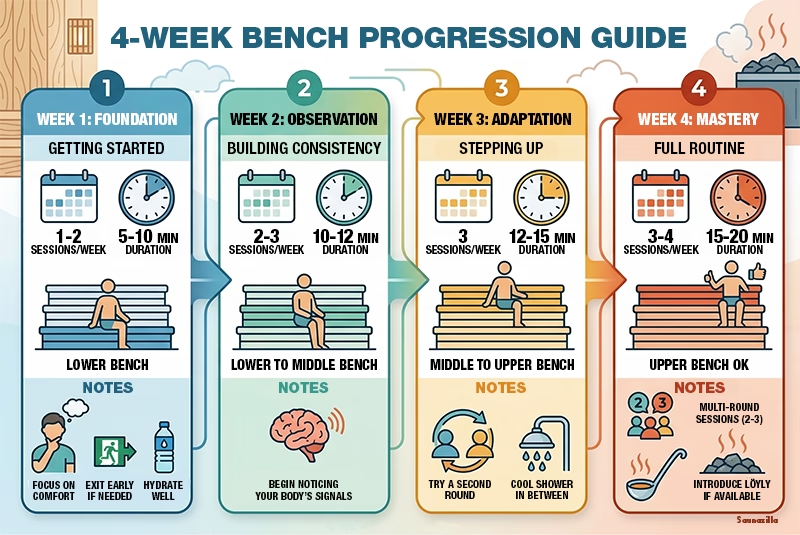
- Go easy on the first week, hit the lower bench for 5-10 minutes and then chill.
- The following week, hit the sauna twice, for 10 minutes at a time, try the middle bench.
- Third week, try three sessions for 15 minutes. See how the upper bench feels. If you’re feeling strong, take another round and a cool shower in between.
- Fourth week, hit the sauna a few times and try 2-3 rounds, perhaps 15-20 minutes each. Get used to the upper bench. Try throwing water on the stones for some löyly.
By week 4, you’ll have a feel for your personal tolerance and preferences. From there, you can aim for 3–4 sessions per week as your baseline — this is where the most significant health benefits begin to show in the research. See how you feel after your first sauna session. Daily sauna use is not a requirement.
Evening Sauna and Sleep Quality
A large global sauna survey (Hussain et al., 2019) found that 83.5% of regular sauna users reported improved sleep quality. The mechanism is straightforward: your core body temperature rises during the session, and the drop that follows in the 1–2 hours afterward mimics the natural thermoregulatory signal your body uses to initiate sleep.
A registered clinical trial is currently underway to test sauna’s effects on sleep, mood, and stress with randomized data. Early results are pending, but the observational signal is strong.
In our experience, a sauna session 1–2 hours before bedtime is one of the most effective sleep tools we’ve found — better than most supplements and far more enjoyable.
Sauna and Exercise: Best Practices for Athletes
The relationship between sauna and exercise is one of the most exciting areas of current research — and one where safe practices make a critical difference.
When to Sauna: After Your Workout, Not Before
First, some basic things for your post-workout sauna protocol. Using a sauna before exercise impairs performance. It raises your core temperature, increases resting heart rate, depletes fluids, and reduces your capacity for work. Save it for after.
After exercise, wait 10–20 minutes to let your heart rate come down from peak levels before entering the sauna. This brief buffer lets your body shift from active exertion to passive heat exposure without stacking too much demand on the heart and blood vessels.
By default, we do not advocate doing any hot yoga or fitness exercises in the sauna.

What the Research Shows
The post-exercise sauna protocol has produced some remarkable findings:
- Endurance performance: Scoon et al. (2007) found that three weeks of post-run sauna bathing increased run-to-exhaustion time by 32% in competitive male runners, primarily through plasma volume expansion (the liquid part of your blood).
- Plasma volume: Stanley et al. (2015) demonstrated that post-training sauna expanded plasma volume by approximately 17.8% after just four exposures in elite cyclists.
- Muscle recovery: Ahokas et al. (2023) showed that a single post-resistance-training infrared sauna session improved jump recovery and reduced soreness over 24–48 hours compared to control.
- Heat acclimation: Kirby et al. (2021) found that intermittent post-exercise sauna bathing improved performance markers in both hot and temperate conditions in trained middle-distance runners after three weeks.
The body also releases heat shock proteins (HSPs) during sauna exposure — the same protective molecules triggered by exercise. This overlap in the cellular stress response is why researchers describe sauna as a “hormetic stressor” similar to physical training. It’s a small, controlled stress that makes your body stronger over time.
💡
Pro tip
If you’re training for endurance events or exercising in hot climates, adding 15–20 minutes of post-workout sauna 3–4 times per week for 2–3 weeks is one of the simplest, most effective heat acclimation protocols available. It’s what many Finnish athletes have done for generations.
A Note on Growth Hormone
Sauna does produce acute spikes in growth hormone — studies from the 1970s and 1980s documented increases of 100–200% above baseline. However, these spikes are temporary and have never been shown to translate into meaningful muscle growth. Don’t use sauna as a substitute for progressive training.
Common Sauna Mistakes to Avoid
Even experienced sauna-goers fall into these traps. Avoiding them is essential.

1. Drinking alcohol before or during a session. Alcohol is the single biggest contributor to sauna-related deaths in Finland and Sweden. It impairs thermoregulation (how your body controls its temperature), dehydrates you faster (your body loses water), and distorts your ability to recognize warning signs. Don’t combine the two.
2. Staying too long. “More is better” doesn’t apply to single-session duration. Going past 20–25 minutes in a traditional sauna offers diminishing returns and increasing risk. The benefits come from frequency over time, not from marathon sessions.
3. Skipping hydration. If your lips feel dry, you’re already behind. Drink before, during (if accessible), and after every session.
4. Ignoring warning signs. Dizziness, nausea, and rapid heartbeat are not badges of endurance. They are your body telling you to leave. Exit, cool down, hydrate.
5. Going too hot too fast as a beginner. Your cardiovascular system needs time to adapt to the heat. Start low and build over weeks, not days.
6. Using electronics in the sauna. Phones die in saunas. The heat destroys batteries and screens. More importantly — a sauna is a phone-free zone for a reason. Disconnecting from devices is part of the mental health benefit.
7. Eating a heavy meal right before. Your blood flow needs to go to your skin for cooling, not to your gut for digestion. Wait 1.5–2 hours after a large meal.
Sauna Etiquette: The Unwritten Rules
Good etiquette makes the sauna experience better for everyone. These norms are universal across Finnish public saunas and apply in most shared sauna environments worldwide.
- Shower before entering. This is good hygiene and courtesy to other bathers.
- Sit on your towel. This protects the wooden bench (from sweat and body oils) and keeps the environment hygienic for the next person.
- Keep conversation quiet — or ask. Some saunas are social. Others are meditative. Read the room. If in doubt, keep your voice low.
- Ask before throwing water on the rocks. You will find a sauna bucket and a laddle, but in a shared sauna, not everyone may want the intense burst of löyly heat. A quick “Mind if I add water?” goes a long way.
- Leave your phone outside. This is both a practical and cultural expectation. The sauna is a space for mindful presence, not scrolling your Tiktok.
- Respect textile-free vs. clothed customs. In Finland, Germany, and Austria, nudity in the sauna tends to be the norm. In North America and parts of Asia, swimwear is expected. When visiting a new sauna, observe or ask about local customs before your first session.
- Don’t block the door or linger in the doorway. Open the door, enter or exit quickly, and close it. Leaving the door open cools the sauna for everyone inside.
Heading to Helsinki? See our complete guide to 100+ public saunas in Helsinki to find your spot.
Safety Precautions and Who Should Be Careful
For the vast majority of healthy adults, sauna bathing is safe. The Hussain & Cohen 2018 review — covering 40 clinical studies and 3,855 participants — reported adverse effects in only a small number of studies, all classified as mild to moderate (heat discomfort, temporary sperm reduction that fully reversed within 6 months).
That said, certain groups should proceed with caution or consult a physician first.
Consult a Doctor Before Regular Sauna Use If You Have:
- Unstable heart conditions: Unstable angina, recent heart attack, or uncontrolled heart failure. People with stable cardiovascular conditions can generally tolerate sauna — the KIHD study participants included men with prior cardiovascular events — but medical clearance is important.
- Uncontrolled high blood pressure: Sauna acutely lowers blood pressure. Combined with any underlying instability, this can cause problems.
- Pregnancy: Finnish evidence suggests that moderate and consistent sauna use (up to 20 minutes at 70°C) may be safe during uncomplicated pregnancy (Ravanelli et al. 2019), but this varies by individual. Always discuss with your OB-GYN.
- Medications affecting heat tolerance: Diuretics, beta-blockers, antihistamines, and certain psychiatric medications can impair sweating or thermoregulation.
Alcohol and Sauna: A Dangerous Combination
We can’t stress this enough. Retrospective population studies from Finland and Sweden have shown that half or more of sauna-related deaths involved alcohol. Alcohol impairs your body’s control over its temperature, promotes dehydration, and blunts your ability to recognize dangerous symptoms. Sauna and alcohol do not mix.
Male Fertility
A 2013 study by Garolla et al. found that three months of regular Finnish sauna use (twice weekly) temporarily reduced sperm count, concentration, and motility. The key word is temporarily — all parameters returned to normal within six months of stopping sauna use.
If you’re actively trying to conceive, consider reducing sauna frequency or session temperature, and talk to your doctor.
Children
Children thermoregulate less efficiently than adults. Shorter sessions (5–10 minutes), lower temperatures, and adult supervision are the rules. In Finland, children commonly use saunas — but always at reduced intensity and duration.
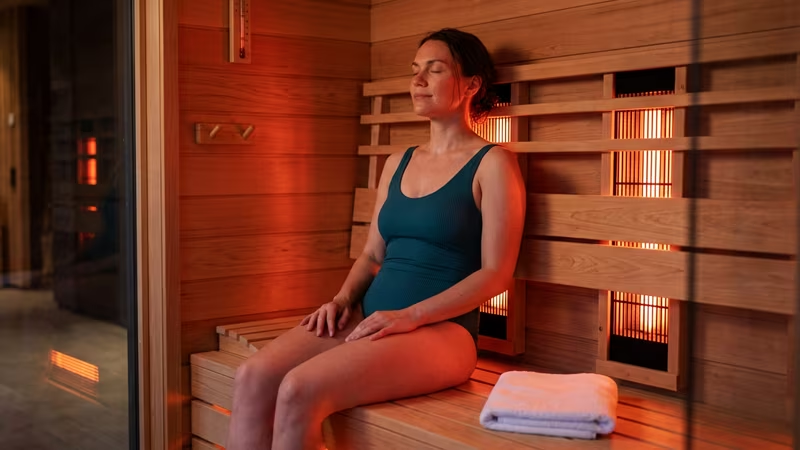
Finnish vs. Infrared vs. Steam Room: Which Is Right for You?
Choosing the right sauna type depends on your goals, heat tolerance, and what’s available to you. Here’s a detailed comparison.
| Traditional Finnish Sauna | Infrared Sauna | Steam Room | |
|---|---|---|---|
| Best for | Long-term cardiovascular health, full traditional experience, heat conditioning | Chronic pain relief, gentle recovery, heat-sensitive users | Respiratory comfort, skin hydration, sinus relief |
| Research depth | Most extensively studied (KIHD 20+ year study, Hussain & Cohen 2018 review) Strong evidence |
Growing evidence base (Masuda et al. 2005, Ahokas et al. 2023) Moderate evidence |
Limited clinical research on health outcomes Limited evidence |
| Home installation | Requires dedicated space, ventilation, and electrical/wood-fired heater | Plug-and-play portable models available; minimal installation | Requires waterproofing, drain, and steam generator — most complex install |
| Typical cost (home) | $3,000–8,000+ | $1,000–5,000 | $3,000–10,000+ |
| Energy use | High (heater runs 30–60 min to preheat) | Low to moderate (heats in 10–15 min) | High (continuous steam generation) |
| Maintenance | Low — occasional wood treatment, rock replacement | Very low — wipe down panels | High — mold prevention, descaling, waterproof seals |
| Social / cultural tradition | Deep roots in Finnish, Baltic, and Scandinavian culture | Modern wellness trend, popularized in North America and Japan | Common in Turkish (hammam) and Roman bath traditions |
| Who should avoid | Those with severe heat intolerance | Those expecting traditional löyly experience | Those sensitive to high humidity or with certain skin conditions |
Our take: If your goal is long-term health and cardiovascular conditioning, the traditional Finnish sauna has by far the deepest research base. If you’re heat-sensitive, recovering from chronic pain, or want a home option with minimal installation, infrared is excellent.
Steam rooms serve a different purpose entirely — they’re best for respiratory comfort and skin hydration, but the clinical research base for health outcomes is thin.
Make Sauna Part of Your Life
Good sauna practices aren’t complicated. Shower before, hydrate well, start at a comfortable temperature, keep sessions to 15–20 minutes, cool down gradually, and build frequency over time. That’s the foundation.
The evidence-based sauna knowledge is clear: regular sauna bathing — done safely and consistently — is one of the simplest, most enjoyable lifestyle habits available for long-term health. A 40% reduction in all-cause mortality. A 65% reduction in Alzheimer’s risk. Improved cardiovascular function, better sleep, faster recovery, and a calmer mind. These aren’t small numbers.
What makes the sauna special is that it asks very little of you. No equipment. No heavy exertion. Just heat, quiet, and time. In Finland and Nordic countries, we’ve known this for generations. Now, the research confirms it for all sauna enthusiasts.
If you want to go deeper into the science behind the sauna lifestyle benefits, read our comprehensive guide to sauna health benefits. If you want to build your sauna vocabulary, browse our sauna glossary. And if you’re ready to wear your sauna passion on your sleeve — literally — check out our top 5 sauna T-shirts for enthusiasts.
The best time to start a sauna habit was years ago. The second best time is today.
Shop by collection
Our most popular sauna-themed products
Frequently Asked Questions About Best Sauna Practices
Is it safe to use a sauna every day?
For most healthy adults, yes. A highly-regarded study showed the lowest mortality risk used the sauna 4–7 times per week. The key is to stay hydrated, keep sessions to 15–20 minutes, and listen to your body. If you have any medical conditions, check with your doctor first.
Do saunas help you lose weight?
Sauna sessions cause temporary weight loss through fluid loss (sweat), which returns once you rehydrate. Sauna is not a fat-burning tool. That said, the stress reduction, improved sleep, and enhanced post-exercise recovery associated with regular sauna use may indirectly support a healthy weight management strategy over time.
Is sauna good for your skin?
The increased blood flow during a sauna session delivers more oxygen and nutrients to your skin’s surface. Sweating helps flush water-soluble compounds and softens the top layer of skin, supporting natural exfoliation. Research found that regular sauna users showed improved epidermal barrier function (how your skin protects and holds moisture) and increased water-holding capacity for the outer layer of your skin. Note that active eczema or heat-induced hives can worsen in high heat.
Can saunas help with anxiety and depression?
The evidence looks promising. A randomized clinical trial published in JAMA Psychiatry found that a single session of whole-body hyperthermia produced rapid, sustained reductions in depressive symptoms lasting up to six weeks. Regular sauna bathing triggers endorphin release, reduces cortisol, and activates the parasympathetic nervous system — all of which support mood regulation. Finnish KIHD data also showed that men with 4–7 weekly sessions had a 78% lower risk of developing psychotic disorders.
How much water should I drink before a sauna?
Aim for 16–24 oz (500–700 ml) in the hour before your session, sipped steadily — not chugged all at once. During and after your session, continue drinking. If your session is longer than 15 minutes or follows a workout, add electrolytes.
Can I use a sauna if I have high blood pressure?
People with controlled hypertension may benefit from sauna use — KIHD data showed that frequent sauna bathing was associated with a 47% lower risk of developing hypertension over 24.7 years. A 2022 randomized controlled trial (Lee et al.) found that regular sauna combined with exercise reduced systolic blood pressure by approximately 8 mmHg. However, if your blood pressure is uncontrolled, consult your physician before starting.
Is sauna safe during pregnancy?
Finnish women have used saunas during pregnancy for centuries, and a 2019 systematic review (Ravanelli et al.) found no increased risk of adverse outcomes with moderate use (up to 20 minutes at temperatures ≤70°C). However, guidelines vary internationally, and individual circumstances differ. Always consult your OB-GYN before sauna use during pregnancy.
Does sauna affect male fertility?
Yes, temporarily. Garolla et al. (2013) documented reduced sperm count, concentration, and motility after three months of twice-weekly sauna use in 10 healthy men. All changes fully reversed within six months of stopping. If you’re actively trying to conceive, discuss sauna frequency with your doctor.
Shop for
Saunazilla
Your friendly authority brand in all things sauna and Finland. “Just Finnish it”.



Saunazilla 2026 | Privacy Policy | Terms Of Service
